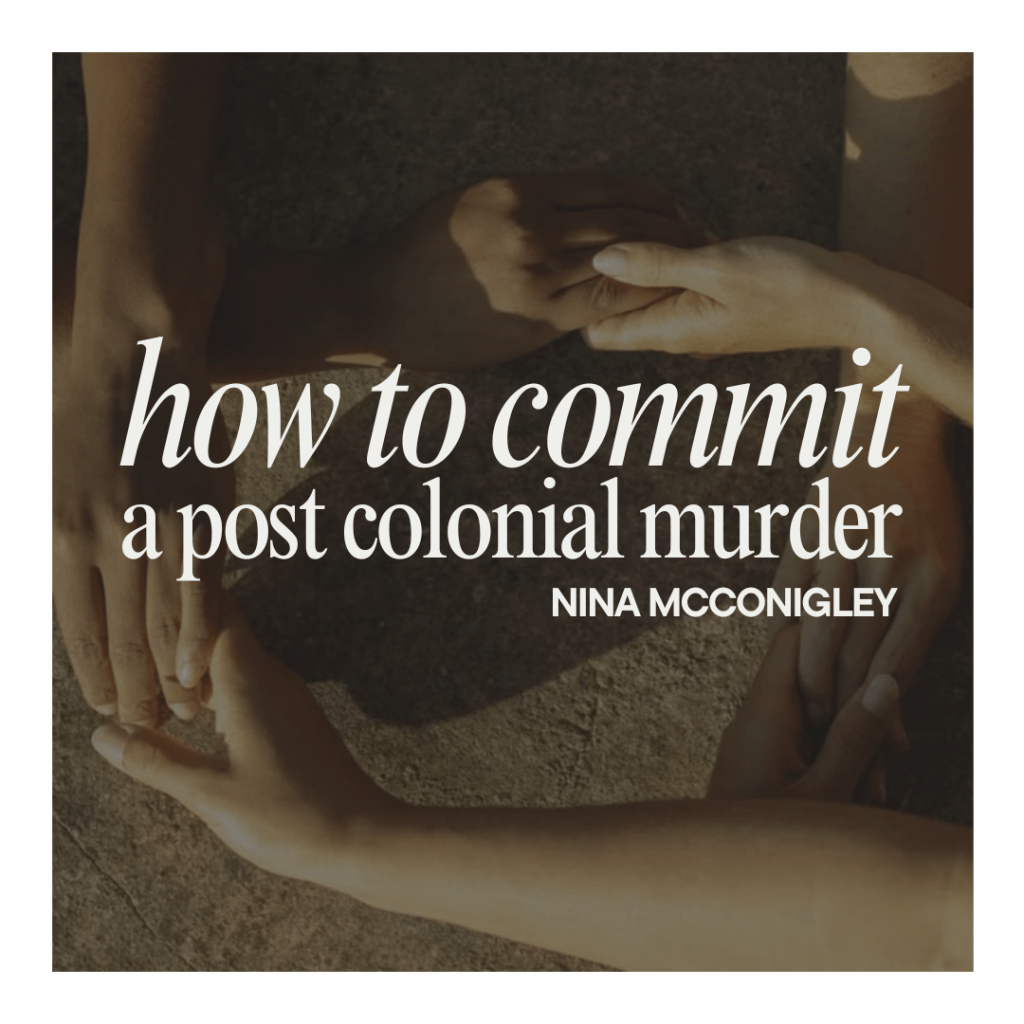
A bold, inventive, and fiercely original debut novel that begins with an uncle dead and his tween niece’s private confession to the reader—she and her sister killed him, and they blame the British.
Summer, 1986. The Creel sisters, Georgie Ayyar and Agatha Krishna, welcome their aunt, uncle and young cousin—newly arrived from India—into their house in rural Wyoming where they’ll all live together. Because this is what families do. That is, until the sisters decide that it’s time for their uncle to die.
˚ ✦ . . ˚ . . ✦ ˚ . ★
My Thoughts
Advanced Reader Copies (ARCs) are a hit or miss. Sometimes the book isn’t for me, even if it sounds like it’s right up my alley — and that’s okay! I try to find positives or at least middle-ground moments when reading ARCs because I don’t want to be 100% a hater.
Let’s start with the good stuff in ‘How to Commit a Postcolonial Murder‘. Right off the bat, I liked that it included a family list and a house layout. Did I use it? No. However, I appreciated that it was there — it could have been helpful.
The plot is what hooked me! I’m not sure why, but the historical fiction genre intrigues me. The writing is solid, too. It flowed well and was easy to get through, although the longer paragraphs dragged a bit. They felt like they went on too long. Still, her prose was phenomenal, so I can’t be mad.
That said, Chapters 7 and 8 threw me off. They felt unnecessary, didn’t add much, and could honestly be cut. I’m unsure if it was intentional, but Chapters 7 and 8 were the same. I know that ARCs are typically unproofed versions of the story, so I’d recommend this to go back to the writing desk.
Here’s where the book lost me a bit: It didn’t feel like it was about the murder or the lead-up. Instead, it felt like the main message was “white people are racist.” And I don’t inherently disagree, and colorism is a huge, valid theme. But it felt like that was the only message, and I was hoping for more. I wanted to feel the sisterhood, the childhood, the emotional weight. The story ended up feeling repetitive instead.
Something else that bugged me was the name-switching. The author kept flipping between “Agatha” and “AK Akka” for one of the sisters, and it was confusing. I get using nicknames, but the constant back and forth pulled me out of the story.
There is no warning about the sexual abuse storyline. I understand wanting to show trauma, but without context or a heads-up, it felt jarring. It felt as if it was included for shock value rather than being deeply explored. I would’ve appreciated a deeper dive into the trauma caused by both racism and abuse, rather than glossing over it.
Another element that didn’t work for me was the magazine quizzes. I know the girls read magazines, but whole chapters of quizzes? I skipped them. They didn’t add anything to the plot or character development.
I was also confused by the timeline. I knew it was set in Wyoming and I figured out the year based on the description, but the book didn’t make that very clear. I wish it had been more obvious.
There were a lot of random explanations — fishing, oil, etc. — that felt like filler. These parts didn’t add to the story and felt unnecessarily long.
Do I Recommend ‘How to Commit a Postcolonial Murder‘
Sure. It’s a decent book. I don’t regret reading it, but I wouldn’t pick it up again. Honestly, I might not be the target audience for this book and that’s okay!
Huge thanks to Netgalley and Penguin Random House for this Advanced Reader Copy! All thoughts and opinions are my own!
Read More Book Reviews Here! Find Me Online: Fable | Goodreads
‘How to Commit a Postcolonial Murder’ will be published on January 20, 2026.
Recent Posts



It’s a good day to have a good day!


What are your thoughts?